Desert and mountains
Marrakech to Merzouga: Driving Route, Stops and Realistic Timing
· 2 min read
The overland journey from Marrakech to the Sahara Desert dunes of Erg Chebbi in Merzouga covers 560 kilometers (350 miles) of Morocco’s most dramatic landscapes. It is one of North Africa’s epic road trips, ascending from palm plains over High Atlas alpine summits before dropping into arid date-palm river corridors and endless sand dunes.
Driving this route in a single day is exhausting (9 to 10 hours of solid driving). Breaking the journey into two relaxed days allows you to explore iconic kasbahs and canyons along the way.
Recommended Driving Route & Itinerary
-
Day 1: Marrakech to Dades Valley (approx. 310 km / 6 hours driving)
- Depart Marrakech via the N9 national highway.
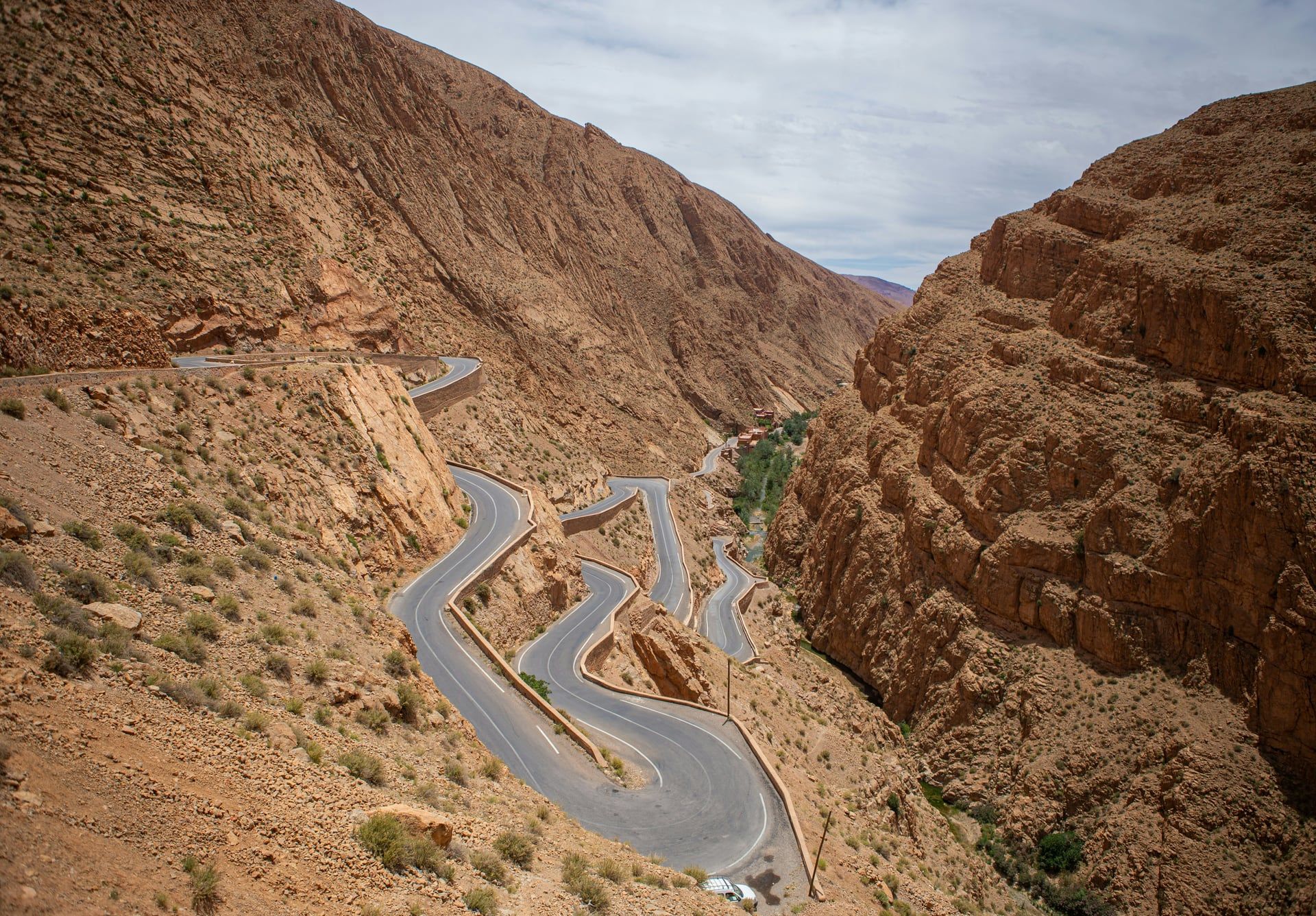
- Climb the switchbacks of the Tizi n’Tichka pass (2,260 m) with panoramic lookout stops.
- Detour along the scenic P1506 valley road to explore the UNESCO ksar of Aït Benhaddou.
- Continue past Ouarzazate and Skoura palmery to spend the night in Boumalne Dades.
-
Day 2: Dades Valley to Merzouga (approx. 250 km / 4.5 hours driving)
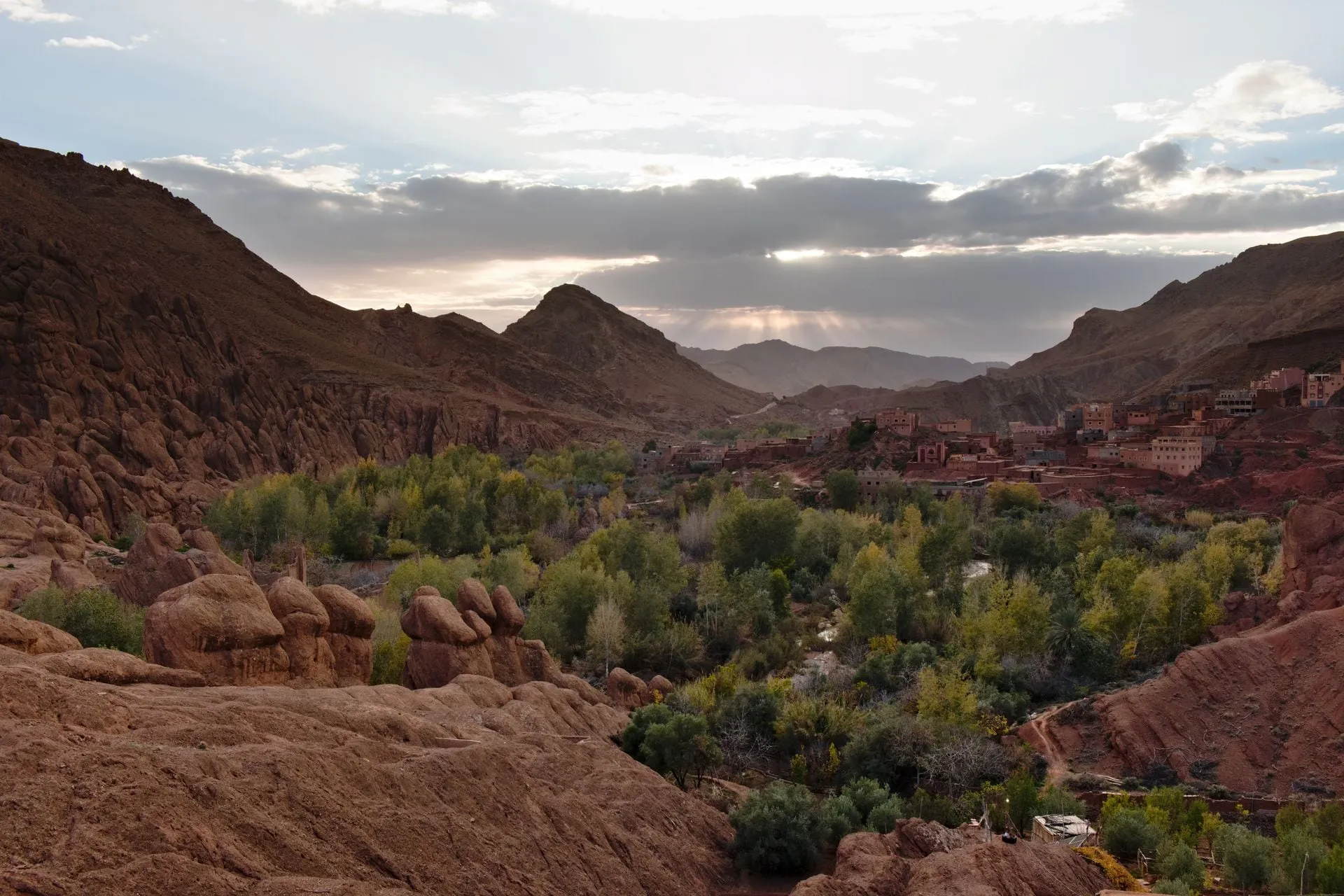
- Drive northeast on the N10 to Tinghir and detour into the vertical canyon of Todra Gorge.
- Continue east through Tinjdad and Erfoud, famous for fossil workshops and sweet Medjool dates.
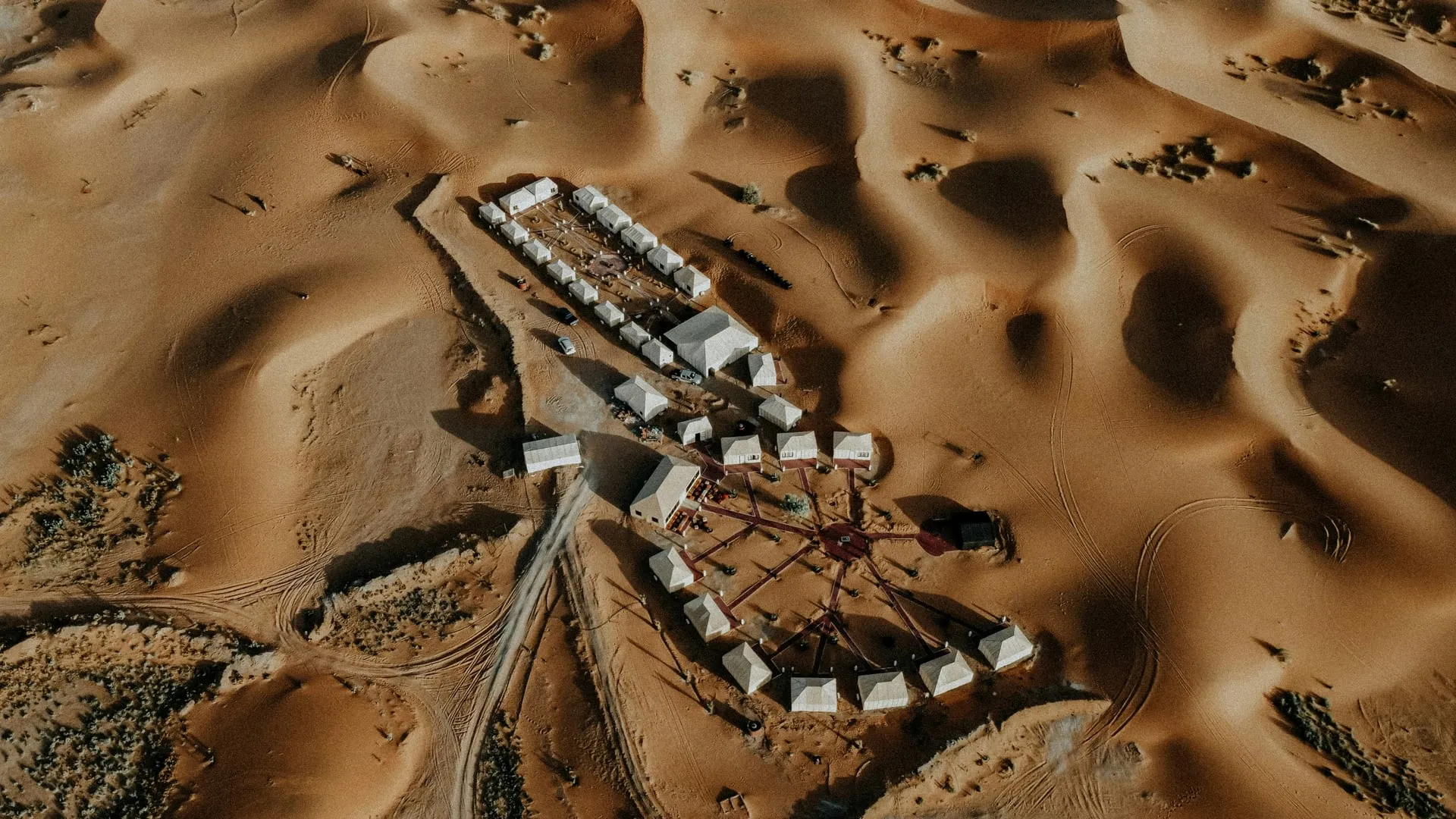
- Arrive in Merzouga by 16:00 to leave your rental car at your desert operator’s base before the sunset camel ride.
Road Conditions and Driving Tips
- The Tizi n’Tichka Pass: The entire mountain highway between Marrakech and Ouarzazate has been widened, paved, and secured with modern retaining walls. It is a smooth two-lane highway, though slow trucks require patient overtaking.
- Police Checkpoints (Contrôles de Gendarmerie): You will pass several police checkpoints on the outskirts of towns and mountain passes. Come to a complete stop at the stop sign (Halte Gendarmerie) and wait for the officer to wave you forward with a smile. Always carry your driver’s license, passport, and car rental contract.
- Speed Limits: Strictly observed with mobile laser radar guns. Common limits are 60 km/h in villages and towns, 80 km/h on rural bends, and 100 km/h on open national highways.
- Night Driving: Avoid driving through the mountain passes or desert plains after dark. Unlit tractors, bicycles, and wandering livestock make night driving hazardous.
Published 2 min readChecked by Morocco Insider Tips on November 6, 2026
This post is also available in: Français
About the author
We gather the best attractions, destinations and routes in Morocco, with real prices and practical tips to help you plan your trip.