SiteCoordinates: 34.07° N, 5.55° W
Volubilis
وليليⵡⵍⵉⵍⵉ
Roman stone and olive groves
See on the map
At a glance
- Recommended stay
- Half day (2 to 3 hours)
- Best season
- March to May and September to November (visit early morning for shade-free ruins)
- Elevation
- 379 m
- Best for
- In-situ Roman floor mosaics · Arch of Caracalla & Basilica · Views toward Moulay Idriss Zerhoun
- UNESCO World Heritage
- whc.unesco.org ↗
- Key landmarks
- Decumanus MaximusTriumphal Arch of CaracallaBasilica and ForumCapitoline TempleHouse of Orpheus mosaicsHouse of the Labours of HerculesHouse of the EphebeRoman olive presses
Roman ruins with well-kept mosaics.
Getting there
35-minute grand taxi north from Meknès (via Moulay Idriss Zerhoun) or 1h15 from Fès
Ancient Capital of Mauretania Tingitana
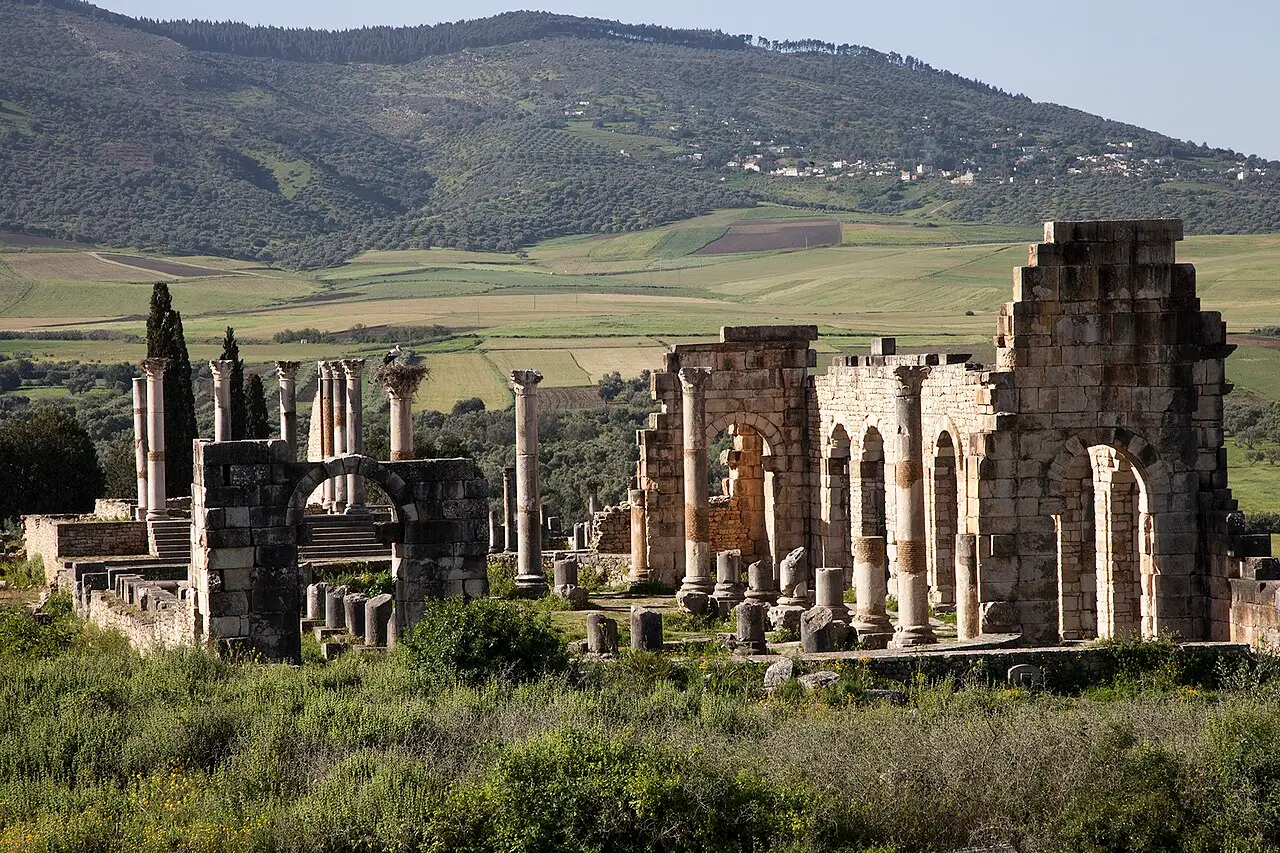
Set on a fertile hillside carpeted with silver olive groves, Volubilis (Walili) stands as Morocco’s most extensive and breathtaking archaeological treasure. Once a thriving Roman provincial capital of twenty thousand inhabitants, the city flourished through olive oil trade and monumental civic architecture, leaving behind a remarkably intact cityscape spanning basilicas, temples, and palatial residences.
Mosaics in Situ and Sacred Zerhoun Hills
What distinguishes Volubilis from many Mediterranean Roman sites is that its masterwork polychrome mosaics remain in situ, exposed to the open sky just as their patrician owners commissioned them. Stroll along the Decumanus Maximus past the Arch of Caracalla, gazing across the green Zerhoun valleys toward the nearby whitewashed pilgrimage town of Moulay Idriss.
Weather and climate
Weather now
Live–––
- Feels like
- ––
- Wind
- –
- Humidity
- –
- UV index
- –
- Today's UV peak
- –
Next 12 hours
Climate by month
Average low and highRainy days
| Month | Average low and high | Rainy days | Event |
|---|---|---|---|
| Jan | 5°C – 16°C42°F – 61°F | 8 | — |
| Feb | 6°C – 17°C43°F – 63°F | 8 | — |
| Mar | 8°C – 20°C47°F – 68°F | 8 | — |
| Apr | 10°C – 22°C50°F – 72°F | 8 | — |
| May | 13°C – 26°C56°F – 79°F | 6 | — |
| Jun | 17°C – 31°C62°F – 88°F | 2 | — |
| Jul | 20°C – 35°C67°F – 95°F | 1 | — |
| Aug | 20°C – 35°C68°F – 95°F | 1 | — |
| Sep | 18°C – 30°C64°F – 86°F | 4 | — |
| Oct | 14°C – 26°C58°F – 79°F | 7 | — |
| Nov | 10°C – 20°C49°F – 68°F | 8 | — |
| Dec | 7°C – 17°C44°F – 62°F | 8 | — |
Source: Open-Meteo Historical Weather API (ERA5 reanalysis), 1991-2020 monthly averages. Updated November 7, 2026. open-meteo.com
Suggested itinerary
Checked by Morocco Insider Tips on November 6, 2026
Day 1 Day 1 — Ancient Mauretanian Capital & Intact Roman Mosaics
- Morning
- Arrive at opening to stroll the Decumanus Maximus and marvel at the remarkably preserved polychrome mosaics in the House of Venus, House of Dionysus, and the Labors of Hercules.
- Afternoon
- Climb up to the Capitoline Temple and the Triumphal Arch of Caracalla overlooking vast plains of ancient olive trees, then inspect artifacts at the modern on-site museum.
- Evening
- Drive 10 minutes up the valley to the holy hillside pilgrimage town of Moulay Idriss Zerhoun for rooftop panoramic views and tender kefta skewers.
Tips
- There is minimal natural shade across the archaeological zone; carry sun protection, a hat, and plenty of drinking water.
- Hiring an official licensed guide at the ticket pavilion gives rich historical context on the Roman and Amazigh civilizations.
Getting around
- Grand taxis run between Meknès (Place de la Foire) and Moulay Idriss for ~15 MAD, from where a short local taxi ride costs 5 MAD to the gate of Volubilis.
- Private round-trip grand taxis from Meknès with wait time typically cost ~250–350 MAD.
Etiquette
- Never step on the mosaic tile tesserae: observe all roped barriers and designated walking pathways.
- When visiting nearby Moulay Idriss Zerhoun, dress respectfully covering shoulders and legs.
Sources, updated November 6, 2026
Nearby
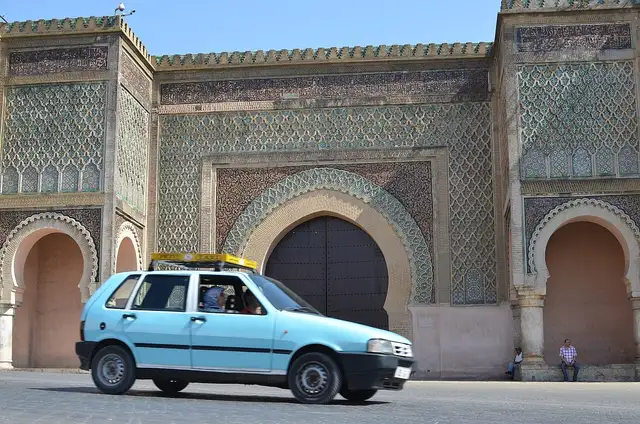 MeknèsمكناسⵎⴽⵏⴰⵙImperial city of Moulay Ismail, calmer than Fès.City · 1 to 2 days · 535 mUNESCO
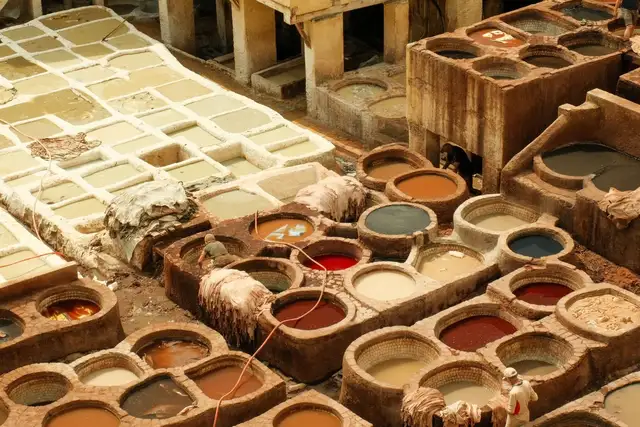 FèsفاسⴼⴰⵙThe largest car-free medina in the world and the Chouara tannery.City · 3 days · 408 mUNESCO
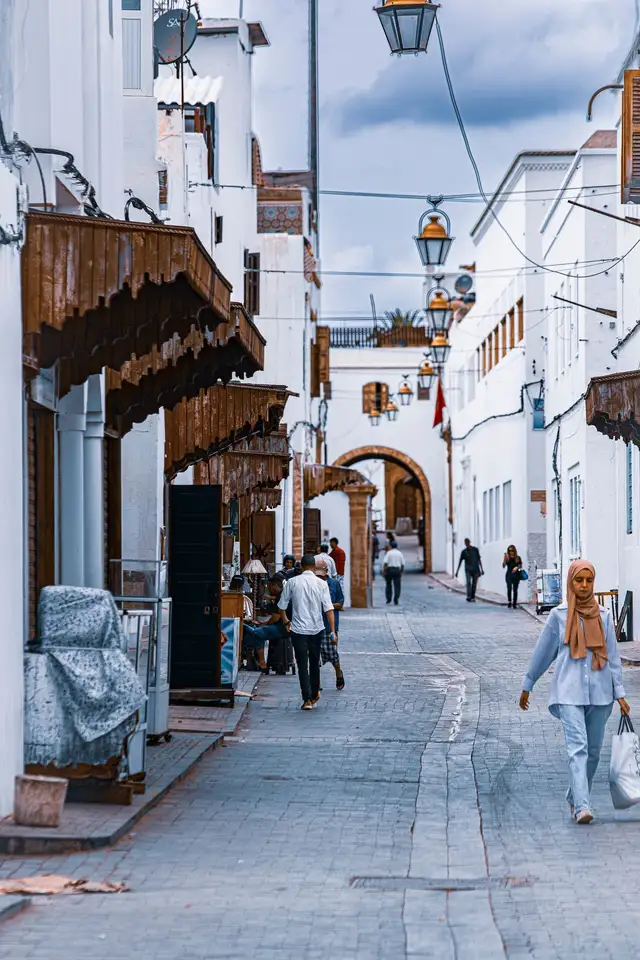 RabatالرباطⵕⵕⴱⴰⵟCalm capital with the Kasbah of the Udayas and the Hassan Tower.City · 1 to 2 days · 18 mUNESCO